Carel

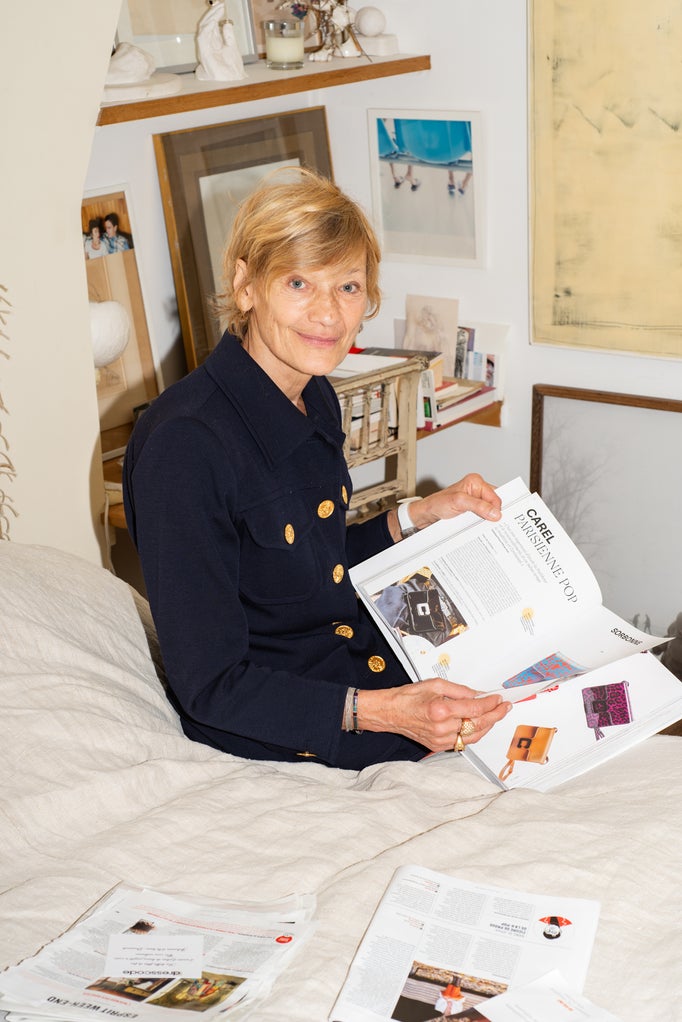
Imparfaite and Carel are much more than a meeting, it's a story of friendship... Two committed women, who share a sense of humor and lightness, an aesthetic with 60's & 70's accents and an uninhibited personality. Since 2020, and the launch of its CAREL CARES program, the brand of Parisian thirty-somethings has been committed to recycling and giving new life to its dormant stocks, notably through a line of shoes made from upcycled or alternative materials. Today, Carel is going further in its desire to slow down the production of new products and is entrusting us with its archives at low prices.

  • 100%
    MADE IN EUROPE
  • 75%
    MODELS HAVE A CAREL CARES LABEL
  • 80%
    ICONS GET AN UPCYCLED VERSION
  • 500
    PAIRS OF SHOES WERE DONATED TO SECOURS POPULAIRE IN 2023

Join the Carel community

www.carel.fr

"Carel and I really hit it off. I've always loved things that are well done, but also the fantasy in life, the color, the little details that make the difference."

Tell us about the origin of Carel.

Frederique : Carel was born in 1952, just after the war. The Carel family were refugees. Georges Carel met his future wife, Rosa, on the streets of Paris. Both of them already came more or less from the world of fashion: Georges's father was a shoemaker in Oran, Algeria, and Rosa's mother came from Eastern Europe. They fell in love and decided to start a shoe brand, with their name, Carel. From the beginning, the distinctive sign was the small heel called "the trotter." It's a heel a few centimeters high, Cuban, square-shaped, which makes it stable and allows women to run everywhere without getting tired or falling. They also wanted very cheerful models, because after the war everything was sad, available in gray or black. They wanted to do something very different and flexible, everyday and comfortable, to support the development of women in society. At that time, women were very emancipated, they had the right to vote since 1944. There was a need for an elegant and sexy shoe while being utilitarian and comfortable. This need is still very current, it is one of the reasons why Carel has stood the test of time.

What was the trigger for launching the brand at the time?

Frederique : Georges and Rosa set up one of their first boutiques at the foot of the Sorbonne. It marked the beginning of success. A small, very colorful and cheerful boutique, all the young students and their professors flocked there. Carel is still very much imbued with this literary and academic world today. We also offer a paperback book with every purchase of a pair of Carel shoes. Carel is also committed to young people by supporting students at the IFM, the French Fashion Institute, by lending them Carel shoes for their fashion shows. In addition, each season we support young Parisian designers by inviting an artist to reinvent the window display of our flagship store, and this sometimes even gives rise to a collaboration with the development of a capsule collection of our bags or shoes.

You took over Carel in 2011, how did this handover take place?

Frederique : I actually bought Carel 13 years ago, directly from the family. They didn't want a competitor to take over; they wanted someone different with new ideas. I came from L'Oréal; I knew nothing about shoes, but I remembered the Carel boutique I used to see as a little girl in Grenoble, which had made a big impression on me. I remembered it as a very pretty heritage brand, well-made with quality products. I immediately liked the idea. I really learned the trade on the job with Michèle Carel, and today Emilie, Georges's granddaughter, who still works in the team. I think they chose me because they liked my project for the brand. The house was aging when I took it over; I wanted to put design back at the center of the debate. I knew there were treasures in the archives to be reawakened. Tony, Georges's most creative son, had worked with all the greatest couturiers of the time: Jean-Paul Gaultier, Karl Lagerfeld, Jean-Charles de Castelbajac, Thierry Mugler, etc. They made the shoes for their shows. So, in the brand's archives, there were gold mines! So when I took over the brand, we worked a lot, really a lot, but we had all the right foundations to get there: a beautiful, established brand with a great history and well-made products from historic suppliers in Italy. All that was missing was new energy and new blood.

How does the creative process work at Carel?

Frederique : With Hubert Canard, the creative director, we talk a lot. We draw a lot of inspiration from the brand's archives, but also from anything we find. Vintage and history play a central role, but we quickly forget that too. There are three main sources of inspiration. The first is the vintage Carel pieces we own. In our outlet store "Sabotine" there were more than 15,000 pairs of shoes of all kinds, straw, gladiator sandals, incredible and often unwearable things! The second is the images and press from the time. All the Carel campaigns by Jean Loup Sieff first of all, who did all the Carel advertising campaigns for more than 20 years. But also press articles from the 60s and all the best-selling pairs photographed over the years. Finally, the last source of inspiration is the drawings, by Jean Paul Gaultier for example, which we find in the archives. Sometimes it's just a line, but you understand the creative intention behind it.

What is the current model that was born from this research?

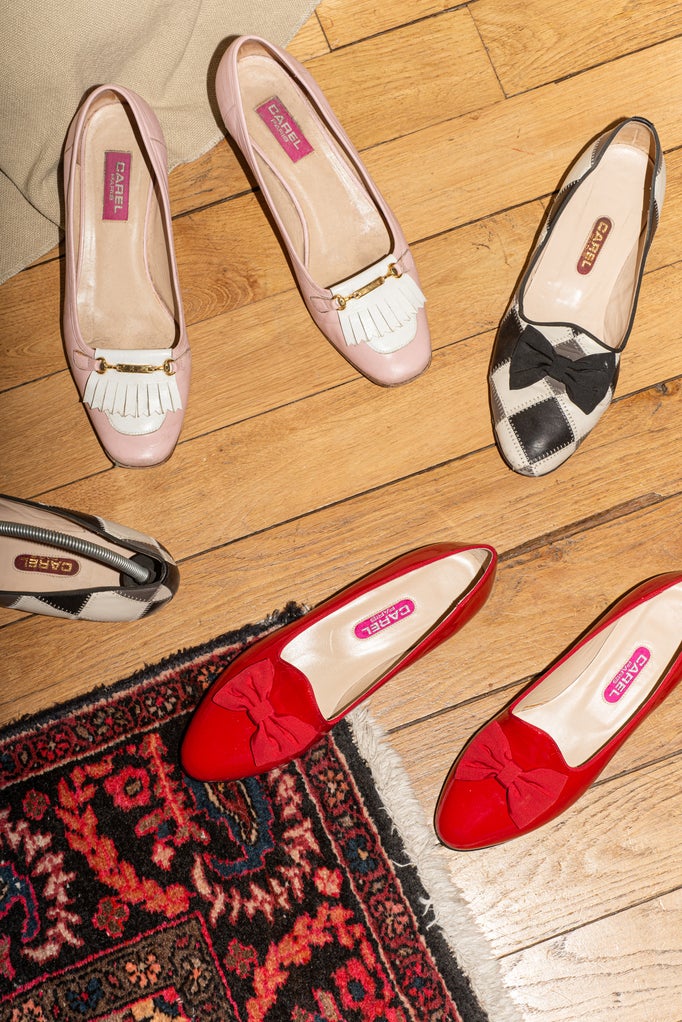
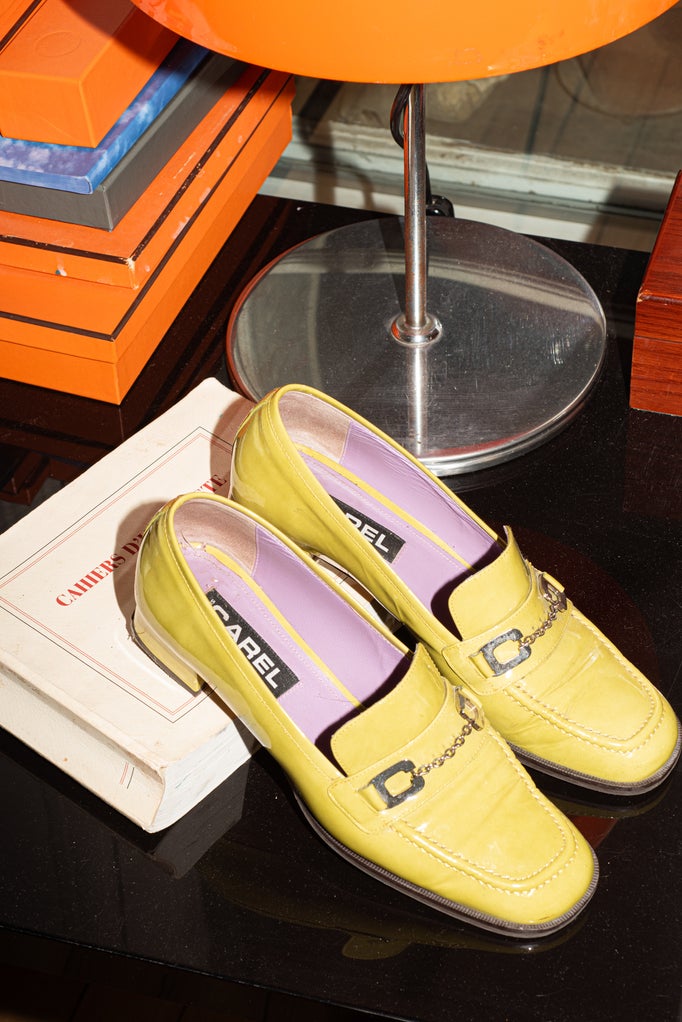
Frederique : The Kina was born from this creative process! Contrary to what everyone believes, our famous Babies Kina is a recent model, we released it 10 years ago. It is simply a model that has THE Carel grammar: small Cuban heel, very stable, the Georges Carel straps adored them and the pop colors, the varnish and the ultra comfort side. It was a journalist from Elle who told us one day, totally by chance, about a model of babies at Carel, so we took a closer look. We then worked and reworked the model, we went with Emilie to see the factories in Italy with a very precise idea of ​​what we wanted and we perfected the model with them until we found the perfect combo. At first the model worked well but it was only after 2 or 3 years that we understood that it was THE model that would mark the renewal of the brand. And then Alexa Chung fell in love with this model and everything accelerated. She wore her Carel
even in the Chanel runways! The model is enjoying phenomenal success even in Asia, where KOLs (Key Opinion Leaders) and K Pop stars are snapping them up.

How much of your own personality is found in Carel?

Frederique : You need fantasy in life. Carel and I really hit it off. I've always liked things that are well done, but also fantasy in life, color, the little detail that makes the difference. I'm also very arty. I encourage my teams to go see exhibitions; they went to see "la
fashion in motion” at the Palais Galliera and the Schiaparelli exhibition recently. I think you have to go see the old masters, the masters of color. Like Albers, who made colored squares within squares, it's fantastic as an inspiration for Carel, they're all there! Or artists like Nicolas de Staël or Rothko, their colors are fabulous. Rothko's story is heavy, he committed suicide etc. but he also wanted to be seen. He also wanted his paintings to never be hung higher than 20 cm from the ground because he wanted to be seen by children. His painting must be experienced in a sensual and carnal way. It's important that we have all these references in mind, so I really encourage young people to go to museums and galleries.

What role does vintage play in your personal wardrobe?

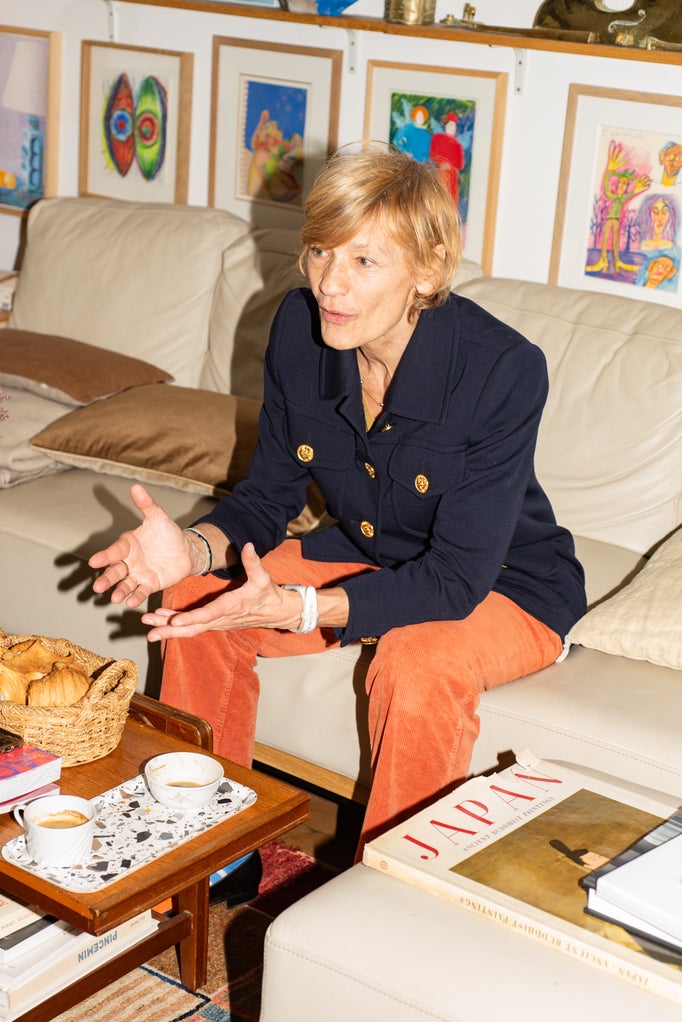
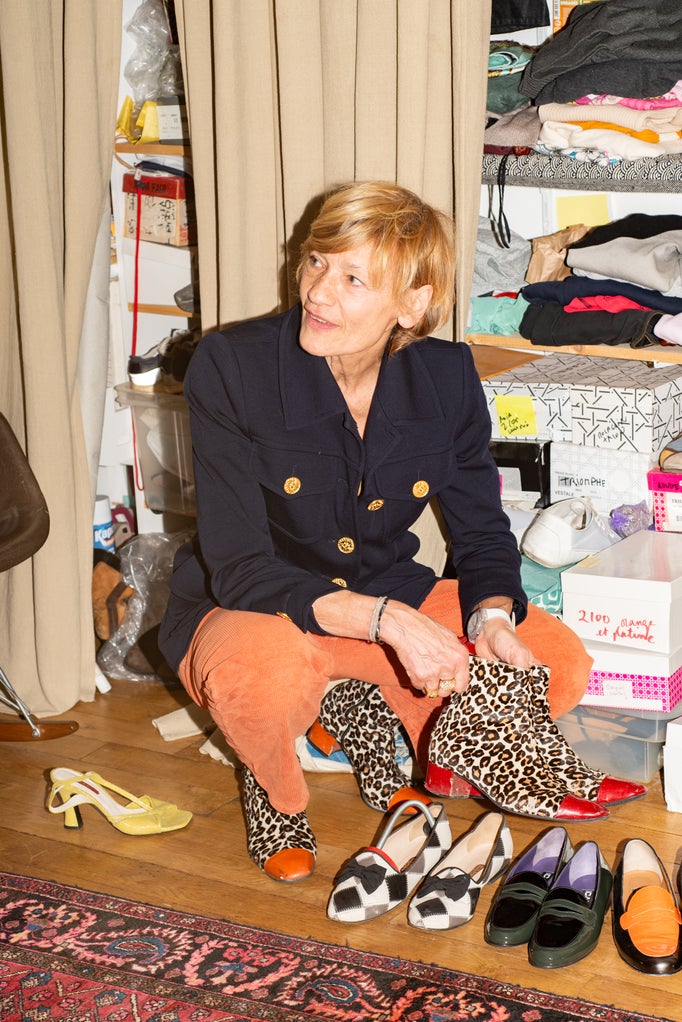
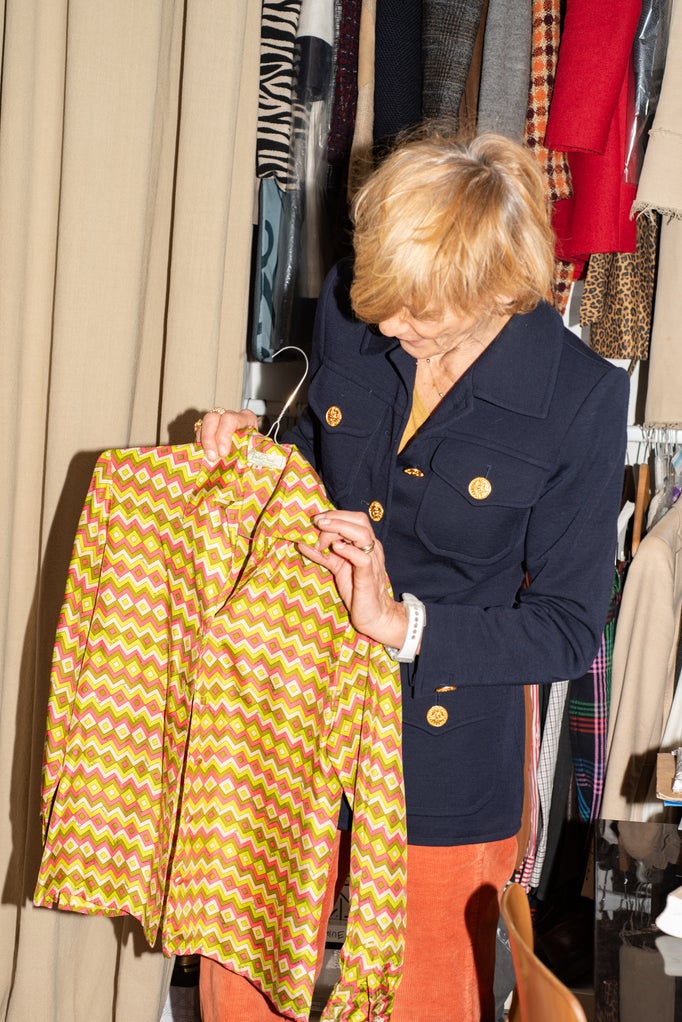
Frederique : It's simple, I hardly buy anything new. Everything I have, I've either had for years or I bought at auction at Drouot or at a garage sale. My wardrobe is essentially vintage. You can find absolutely fabulous things at Drouot. It's true that it takes a little time, but you can get some amazing deals, like these Emilio Pucci shirts I found at a sale. They're in perfect condition, in magnificent silk, Made in Italy, I got them for next to nothing. I also really like this Yves Saint Laurent jacket that I'm wearing. It's the piece I always wear to every slightly formal event where I want to feel comfortable and confident.

How do you raise awareness among your teams about the environmental issues in fashion?

Frederique : Honestly, I didn't have to do much. Everyone is keen to do better. Women, on the other hand, are much more sensitive to these issues than men. I don't know if it's our relationship with children, with the future we have in store for them, but it's true that the women on the team are the driving force behind our change. Camille Rachon in particular. Camille is our CSR manager. She started in creation with Hubert and asked lots of questions about how things were done and suggested lots of solutions to improve us. I really wanted Carel to take a step forward on these issues, and Camille became our sustainable development manager in 2020, and she delivers a lot. She mobilizes each department cross-functionally on the ecological issue. Collection, logistics, packaging, everything is audited in order to gradually improve our way of consuming and designing our collections.

What are your objectives for 2024 regarding your CSR commitments?

Frederique : There's still a long way to go, but we've set ourselves ambitious goals for 2024. First, we're undertaking our first carbon footprint assessment: we're embarking on this great adventure to accurately and comprehensively quantify our emissions. This will allow us to identify measures and levers to reduce our impact. Second, we're improving our traceability: as part of the AGEC law, we're implementing a QR code system in our stores and online, which will allow us to discover the stages and locations of manufacturing of our shoes, as well as their precise composition. Finally, vegan certification: we want to label our line of sneakers as 100% made from alternative materials in order to meet consumers' growing expectations for leather-free and ethical fashion. We'd also like to offer customers the option of returning their pair to the store so that they can be fully recycled.

What is Carel Cares?

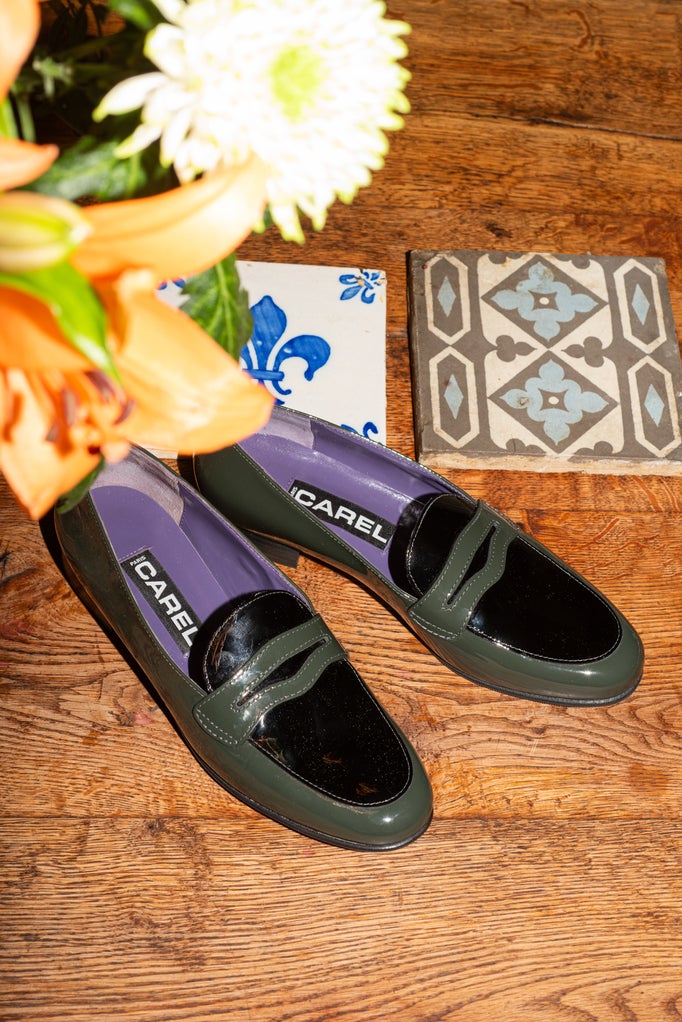
Frederique : We actually created the Carel Cares label in 2020 to make our actions more easily identifiable. There are three essential axes for more sustainable shoes: made in France, upcycling, and alternative materials. Since its inception, Carel has developed long-term partnerships with small-scale workshops in Europe, mainly in Italy. This proximity to the workshops guarantees us excellent traceability. But we are also committed to highlighting French know-how by developing partnerships with living heritage companies for very specific products such as espadrilles. For three seasons now, we have designed a line of espadrilles every summer in collaboration with a traditional workshop in the Basque Country. We are also increasingly integrating recycled materials into our collections to limit the use and waste of resources. We recover leftover production and other forgotten premium-quality leathers to give them a second life, thus creating exclusive series in very limited quantities. We also partner with Parisian showrooms such as Adapta, to source stocks of dormant leathers from major brands that are destined for destruction. We also test alternative materials to traditional leathers with our workshops. We have designed a whole line of shoes created from Uppeal, which is a material made from apple skin from the food industry. After various tests, this material has proven itself and allows us to offer reinvented icons for customers looking for vegan materials. We carefully select the leathers we use, we favor tanneries
Gold or Silver certified by the Leather Working Group. This label aims to promote sustainable and responsible practices. Tanneries are audited on numerous environmental and social criteria, which guarantees us that the leather is produced under good conditions.

"We draw a lot of inspiration from the brand's archives, but also from anything we find. Vintage and history play a central role."